
Your generous donations are enabling Help Tibet to continue to support the Tibetan communities in Nepal and India in the aftermath of the pandemic. We are grateful for any donations, large or small, regular or one offs.
Welcome to Help Tibet
In consultation with our Regional Advisor, we have now been able to identify several situations in which we can make a positive impact.
We are supporting 7 young people between the ages of 8 and 22 who have all lost their parents and, in several cases, siblings as well. We have committed to ensuring that they can all finish their education, whether it is schooling and/or further education as well as their rent/hostel accommodation, food and pocket money.
We are also in touch with a family who lost their breadwinner in the flood and have agreed to support them for 2 years.
We would like to thank everyone who has so kindly donated funds for this emergency thus enabling these young people to have a future. There is still a long way to go for the survivors, and, of course, we would always be grateful for any donations that you can spare.
23rd October, 2026.
Following the disastrous events on the Tibet/Nepal border on Wednesday, 26th August 2026, it is likely that many will need help. However, at the moment, owing to the terrain, access to the affected area is limited, as is information.
We were immediately in touch with our regional advisor, who is updating us as soon as information becomes available. A Trustee visit had already been scheduled for late September, by which time a better assessment of needs and requirements can be made.
We will continue to update this page.
1st September 2026.
our
Mission statement
Help Tibet works in partnership with people of Tibetan origin by funding grants to promote sustainable communities and to develop initiatives which support the wellbeing of the most vulnerable.
We seek to achieve our aims through the funding of programmes and projects to meet the needs of Tibetans living in exile in India and Nepal. These include:
- The development of pre-school education
- The provision of libraries and science laboratories in primary and secondary schools
- Skills development for employment opportunities
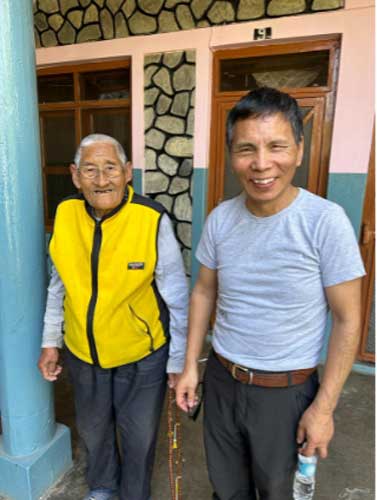
- Care of older people
- Improvements in health care, sanitation and the supply of water
- Installation of alternative energy systems
- Responding to emergency situations where appropriate